22
Aug
2023
Acoustical determination of primary stability of femoral short stem during uncemented hip implantation
Carlos A. Fonseca Ulloa, Simon Schreynemackers, Torben Harz, Frieder W. Lang, Christian Fölsch, Markus Rickert, Alexander Jahnke, Bernd A. Ishaque
Background: Preparing the medullary space of the femur aims to create an ideal form-fitting of cementless implants to provide sufficient initial stability, which is crucial for osseous integration, ensuring good long-term
results. Hammering the implant into the proximal femur creates a press-fit anchoring of the endoprosthesis in the medullary space. Implanting the optimal size of the shaft for best fitting should avoid damage to the bone.
Modified acoustic signals in connection with implantation are being detected by surgeons and might be related to the primary stability of the implant.
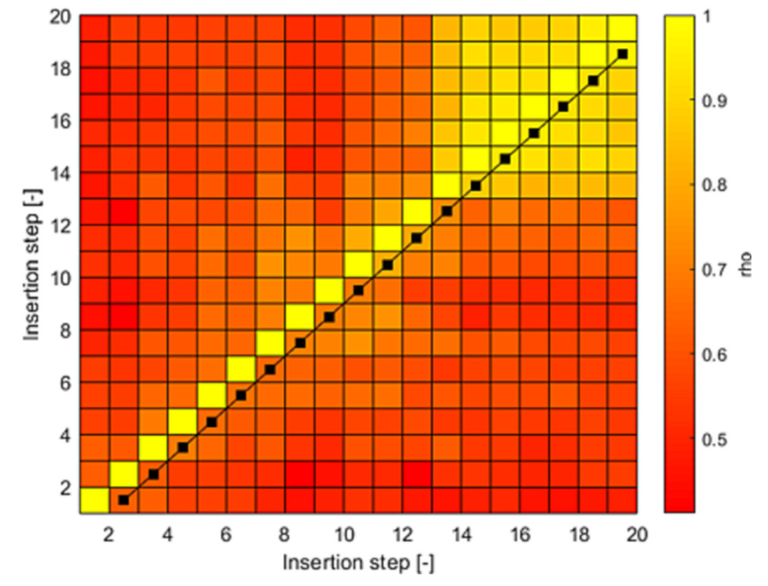
Methods: This study aims to explore the relationship between frequency sound patterns and the change in stem stability. For this purpose, n = 32 Metha® short stems were implanted in a clinical setting by the same surgeon. During implantation, the sounds were recorded. To define a change in the acoustic system response during the
operation, the individual blows of the implantation sequence were correlated with one another.
Findings: An algorithm was able to subdivide through sound analysis two groups of hammer blows (area 1 and area 2) since the characteristics of these groups showed significant differences within the frequency range of 100 Hz to 24 kHz. The edge between both groups, detected by the algorithm, was validated with expert surgeons’ classifications of the same data.
Interpretation: In conclusion, monitoring, the hammer blows sound might allow quantification of the primary
stability of the implant. Sound analysis including patient parameters and a classification algorithm could provide
a precise characterization of implant stability.
Dez
2025
Acoustic Prediction and Biomechanical Validation of Primary Stability in Uncemented Short‐Stem Hip Prostheses: An Experimental Study
Alexander Jahnke*,
Simon Schreynemackers*, Ahmed Tawous , Swantje Petersen,
Samar Hamad, Markus Rickert,
Bernd Ishaque
Introduction: In uncemented hip arthroplasty, achieving sufficient primary stability is essential for long‐term implant success. However, objective intraoperative assessment of fixation quality remains challenging. Acoustic analysis of stem impaction sounds offers a promising tool for real‐time evaluation, but its diagnostic accuracy and biomechanical correlation require further validation.
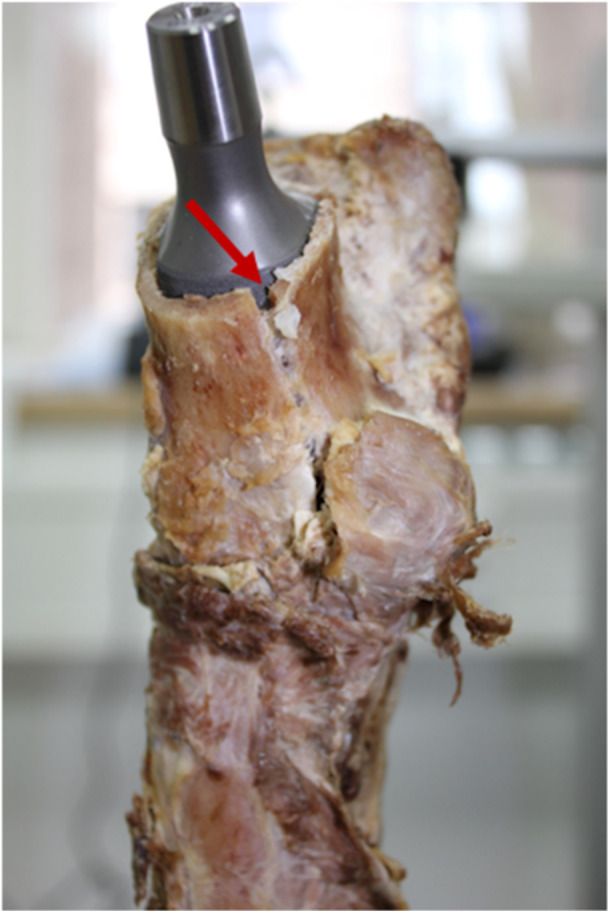
Methods: Twelve formalin‐fixed human femora were implanted with cementless Metha short stems under three predefined anchorage conditions: loose, optimal (fit), and fracture‐inducing press‐fit. Impaction sounds were recorded using calibrated microphones and processed via frequency‐domain analysis. Relative micromotions were quantified under torsional loading to biomechanically assess primary stability. Spectral markers reliably differentiated between anchorage states.
Results: The transition from loose to fit showed minimal spectral change, yet emerged as statistically significant across multiple frequency clusters, while fit‐to‐fracture was characterized by a significant increase in low‐frequency energy (<2.5kHz) and pronounced attenuation in high‐frequency bands (>15kHz). These acoustic signatures closely correlated with biomechanically measured micromotions, which showed a distinct hierarchy: fracture < fit < loose. Cluster permutation analysis confirmed statistically significant differences between all groups, particularly in the fracture condition.
Discussion: This in vitro study demonstrates that frequency‐based acoustic analysis can distinguish between stable, insufficient, and over‐press‐fit conditions during stem implantation. The findings support the feasibility of intraoperative acoustic monitoring as a real‐time, objective tool to enhance implant safety and detect cortical compromise at an early stage, before clinical manifestation. However, translation into a clinical product will require further algorithmic development, integration into a surgical interface, and prospective in vivo validation.